


Rabat through history
One city, many eras. From ancient Sala to Almohad walls, from the medina to the modern capital: discover the histories that shaped Rabat.
Before Rabat: the city of Sala
The history of this territory begins before the medieval city. At Chellah, above the Bouregreg, the remains of Sala reveal an ancient settlement that was first Mauretanian and later Roman. Its riverside position helps explain the long history of trade and settlement around the estuary.
Ancient Sala at Chellah should not be confused with present-day Salé across the river. They share an estuary, but their locations and historical development are distinct.

The Almohads and Ribat al-Fath
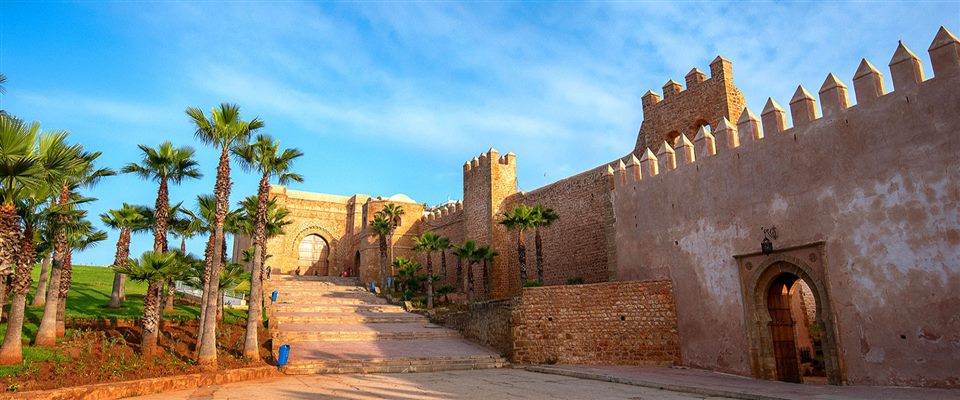
The Almohads gave Rabat a new military and urban role. Abd al-Moumen strengthened the Kasbah, whose position at the mouth of the Bouregreg offered a strategic base facing the Atlantic and al-Andalus. The name Ribat al-Fath belongs to this period.
Under Yaacoub al-Mansour, monumental gates, walls and the great Hassan mosque expressed an imperial ambition. The mosque remained unfinished. Its surviving tower and columns still convey the scale of the project.
Chellah’s Marinid necropolis
In 1285, Sultan Abu Yusuf Yaqub established a dynastic burial ground at Chellah. Abu al-Hasan later expanded the complex and enclosed it with walls in 1339. Medieval buildings stood alongside the ancient city’s remains.
This layering gives Chellah its character. The minaret, tombs and enclosure belong to a different historical period from the streets and public buildings of ancient Sala.
Andalusian arrivals and the Bouregreg
In the early 17th century, arrivals from the Iberian Peninsula, including Moriscos expelled from Spain, reshaped the medina and Kasbah. They brought craft skills, traditions and new urban activity.
The estuary also became a centre of commerce and maritime activity, including privateering and local political powers. This was one chapter in Rabat’s history, whose traces survive in the city’s fabric and memory.
A capital and a new town
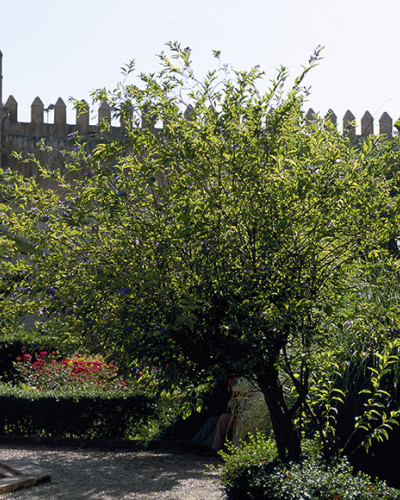
In 1912, at the beginning of the French Protectorate, Rabat became Morocco’s administrative capital. A new town developed with avenues, public buildings, residential districts and gardens, including through Henri Prost’s planning work.
This transformation must be understood in its colonial context. The modern city grew beside the medina and older monuments. Their different functions and forms, and the connections between them, remain visible today.
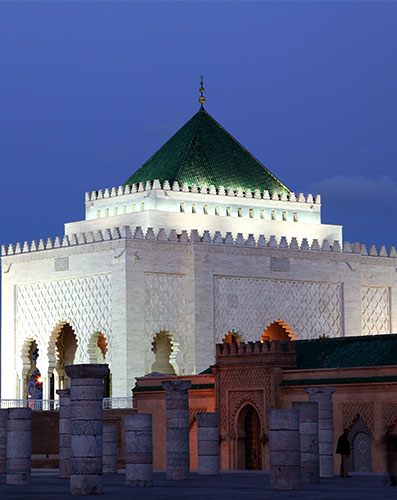
Independent Morocco’s capital and shared heritage
After independence in 1956, Rabat remained the Kingdom’s capital. Its administrative and political role developed alongside cultural institutions, museums and new urban spaces. The city continues to change around the Bouregreg and Atlantic coast.
In 2012, UNESCO inscribed “Rabat, Modern Capital and Historic City: a Shared Heritage”. The inscription covers a defined urban ensemble, recognising the meeting of older heritage and modern town planning rather than one isolated monument.